November 10, 2026
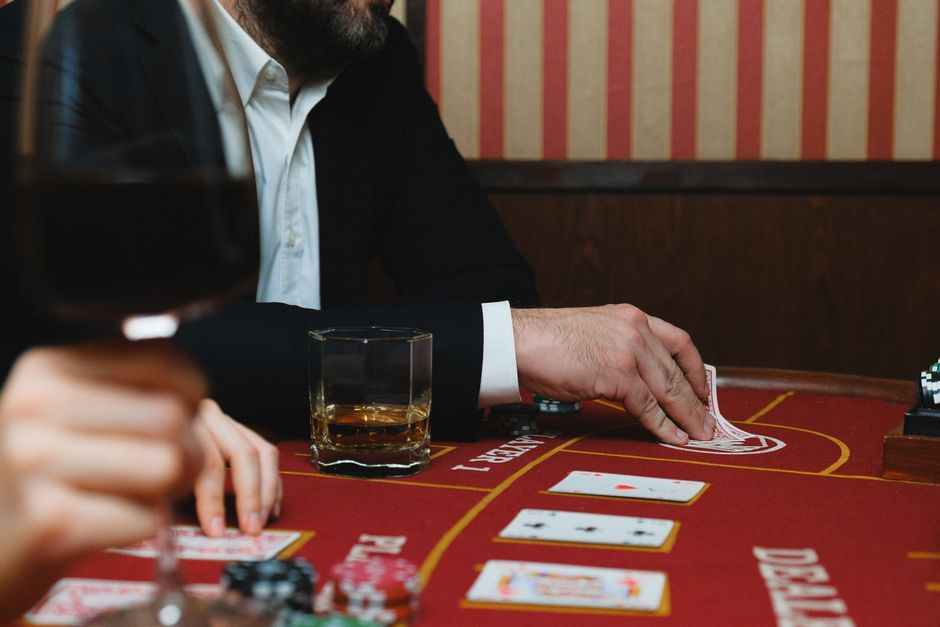
The house always wins. You’ve heard it a thousand times, usually from someone who just lost a rent payment on a parlay. But if that were the whole truth, iGaming wouldn’t be a $100 billion industry. The real secret isn’t that the house always wins—it’s that the house wins slowly, and the players who understand the math, the psychology, and the tech are the ones who actually walk away with a story worth telling. This isn’t about luck. It’s about knowing the terrain.
Whether you’re spinning slots at 2 a.m., grinding a low-stakes poker table, or sweating a four-team teaser, the landscape is the same: it’s you versus an algorithm designed to bleed you dry over time. But there’s a way to play that keeps the bleeding minimal and the entertainment value high. Here’s what the sharpest minds in the game know that the casual player doesn’t.
1. House Edge Is Not a Suggestion—It’s a Countdown
Every bet you place has a mathematical expiration date. The house edge is the percentage of each wager the casino expects to keep over the long run. It doesn’t care about your hot streak. It doesn’t care about your feelings. It just grinds.
Take blackjack. A player using basic strategy can reduce the house edge to roughly 0.5%. That means for every $100 you cycle through the table, you lose about 50 cents on average. Compare that to American roulette, where the double zero spikes the edge to 5.26%. For every $100 you run through, you lose $5.26. Same game, different math. Over a two-hour session, that difference is the gap between a modest loss and a mortgage payment.
Slot machines are the wild card. Their house edge ranges from 2% to 15% depending on the game and the jurisdiction. A penny slot with a 12% edge is not a fun way to spend an evening—it’s a donation. The first rule of smart iGaming is: know the edge before you sit down. If you can’t find it, assume it’s high and walk away.
2. Variance Is the Rollercoaster You Can’t See
House edge tells you what happens over 100,000 hands. Variance tells you what happens in the next 100. Two games can have the same edge but wildly different swings. A low-variance game (like a standard 3-reel slot or a flat-bet blackjack table) pays small and often. A high-variance game (like a progressive jackpot slot or a multi-table poker tournament) can leave you broke for hours before hitting a massive score.
Why does this matter? Because your bankroll has to survive the swings to reach the long run. If you sit at a high-variance slot with $100 and a $1 spin, you might be gone in 20 minutes. If you sit at a low-variance game with the same bankroll, you could play for three hours. Neither is “better,” but one is a lot less stressful if you’re just there to have fun.
Professional poker players obsess over variance. They know that a 10-buy-in downswing is not a sign of failure—it’s just the math doing its thing. Amateur players panic and tilt. The difference is preparation.
3. Bonuses Are Marketing, Not Free Money
The welcome bonus is the oldest trick in the book, and it still works because it feels like free cash. It isn’t. It’s a contract with strings attached, and those strings are called wagering requirements. A good place to continue is slot dana.
Here’s a real example: a casino offers a 100% match up to $500 with a 35x wagering requirement. Sounds great, right? But that 35x usually applies to the bonus amount, not your deposit. So if you deposit $500 and get a $500 bonus, you have to wager $17,500 before you can withdraw a dime. Most slot machines contribute 100% to wagering, but table games like blackjack often contribute only 10% or 20%. That means you’d need to wager $175,000 on blackjack to clear the bonus. Good luck.
Smart players read the terms. They look for:
- Wagering requirement (anything over 40x is brutal)
- Game weightings (slots usually 100%, table games often 10%)
- Maximum bet during wagering (often $5 or $10—violate it and you lose the bonus)
- Time limits (some bonuses expire in 7 days)
If the terms are ugly, skip the bonus. Playing with your own cash and no strings is often a better deal.
4. Poker Is a Skill Game—But the Rake Eats You Alive
Poker is the only game in the casino where you can have a positive expected value. But the rake—the commission the house takes from every pot—changes the math. A standard live $1/$2 game might take 10% up to $5 per pot, plus a $1 jackpot drop. That’s $6 out of every pot that reaches a certain size.
Online, the rake is usually 5% to 10% capped at $3. That sounds better, but the games move faster. You might see 80 hands per hour online versus 25 live. The rake adds up quicker.
To beat the rake, you need to be significantly better than your opponents. At low stakes, the rake can be so high that even a good player grinds out a break-even existence. The sweet spot is usually $2/$5 live or $0.50/$1 online—high enough that the rake is proportionally smaller, but low enough that the opposition is soft.
And remember: tournaments are different. The house takes a flat fee (the “vig” or “buy-in fee”), usually 10% of the prize pool. A $100 tournament with a $10 fee means 10% of your buy-in goes to the house before a single card is dealt. That’s a steep hurdle, but the upside is that the rake is capped. Cash games rake forever.
5. The Tech Is Rigged—But Not in the Way You Think
Every online slot uses a random number generator (RNG) that’s been audited by third parties like eCOGRA or iTech Labs. The results are statistically random. The game isn’t “due” for a jackpot. The reels don’t “heat up.” Each spin is independent.
But the tech is designed to keep you playing. Here’s how:
- Near misses: You see two jackpot symbols and a third one just above the payline. That triggers the same dopamine response as a win, but you lost.
- Losses disguised as wins: A slot pays you $2 on a $5 spin. The screen flashes, music plays, and you feel like you won—but you’re down $3.
- Autoplay and turbo mode: These features increase the number of spins per hour, which increases the house’s expected profit. They also make you less likely to stop.
Live dealer games are different. They use real cards and real wheels, but the software still tracks your bets and can offer “suggested” bets or “hot” tables. It’s not cheating—it’s just optimization for the house.
The smartest players set a timer. When it goes off, they stop. No exceptions.
6. Bankroll Management Is the Only Skill That Matters
You can be the best poker player in the world, but if you buy into a game that’s too big for your bankroll, one bad beat will ruin you. The same goes for slots, sports betting, and blackjack.
Here’s a simple framework used by professional gamblers:
- Separate your bankroll from your life money. Never play with rent, groceries, or savings. If you can’t afford to lose it, you can’t afford to play.
- Set a session limit. Decide beforehand how much you’re willing to lose in one sitting—say, 10% of your total bankroll. If you hit that, you walk.
- Set a win limit. If you double your session buy-in, pocket the profit and keep playing with the original amount. That way, you lock in a win.
- Track everything. Use a spreadsheet or an app. You’ll be shocked at how much you actually spend.
Sports bettors use a similar system: 1-2% of bankroll per bet. That way, a 10-bet losing streak doesn’t wipe you out. It stings, but you survive to bet another day.
7. The Best Players Know When to Walk Away
This is the hardest lesson. The casino is designed to keep you there—free drinks, bright lights, no clocks, no windows. It’s a sensory deprivation tank for your wallet. The people who win aren’t the ones who hit the jackpot. They’re the ones who leave when they’re ahead.
I’ve seen it a hundred times: a player turns $200 into $2,000, then gives it all back because they wanted $5,000. The house edge doesn’t care about your goals. It just waits.
So here’s the takeaway. Treat iGaming like a night out—a movie, a concert, a nice dinner. You pay for the experience. If you happen to walk away with more money than you started with, fantastic. But if you go in expecting to win, you’re playing the wrong game.
The real odds are simple: the longer you play, the more likely you are to lose. The smartest players play short, play for fun, and play with money they can afford to lose. Everything else is just noise.