November 19, 2026
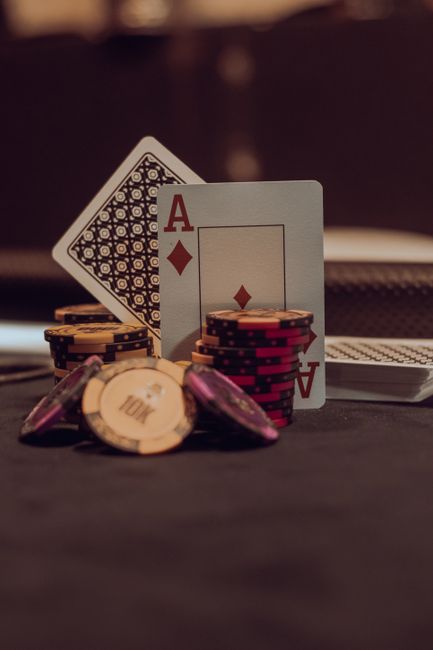
Two players sit down at the same online slot. Same game, same $100 starting balance, same $1 spin. Twenty minutes later, one player is broke and the other has doubled up. Neither of them did anything wrong. They were simply on opposite sides of the same mathematical curve, and understanding that curve is the closest thing to an edge you'll ever get in a casino.
Let's talk about volatility—the single most misunderstood concept in iGaming, and the one that actually changes how you should bet.
What Volatility Actually Means (Not What Affiliates Tell You)
RTP gets all the attention. Every casino page screams about a 96.5% return, and fair enough—it matters over millions of spins. But RTP tells you nothing about what happens in the next 500 spins, which is roughly the lifespan of your average session.
Volatility describes how that return is delivered. A high-volatility slot might pay out 96% RTP through rare, enormous hits. A low-volatility slot might pay the same 96% through frequent, modest wins. Same number on paper. Completely different experience at the reels.
Think of it like two investment portfolios. Both average 7% annual returns. One is index funds; the other is a handful of biotech stocks. If you need money in six months, those portfolios are not equivalent, no matter what the averages say. Readers looking for specifics may like สล็อต.
The Three Tiers, With Real Numbers
Volatility typically breaks into low, medium, and high. Here's what that looks like in practice on a $1 spin:
- Low volatility: Wins land on roughly 40-50% of spins, but many are below your bet size. Hit frequency feels generous. Session length stretches out. Examples: Starburst, Blood Suckers. Max win often capped around 500x.
- Medium volatility: Around 25-35% hit rate. You'll go 10-15 spins without a win fairly often, but when a bonus triggers, it stings meaningfully. Examples: Book of Dead, most Pragmatic mid-tier releases. Max win in the 5,000x range.
- High volatility: Hit rate can drop below 20% on some titles. Dead spins cluster hard. But max wins reach 10,000x, 50,000x, even 100,000x on the extreme end. Examples: San Quentin xWays, Money Train 3, Mental.
A 100,000x max win sounds incredible until you do the math: at 0.0001% probability of hitting it, you could spin for years and never see it. That jackpot isn't your plan. It's a lottery ticket embedded in a game you're also playing for entertainment.
The Variance Math That Breaks Bankrolls
Here's a concrete simulation worth internalizing. Take a 96% RTP high-volatility slot with a 22% hit rate. Drop $100 in at $1 per spin.
Across 1,000 simulated sessions, the median session ends with around $40 remaining—you'll burn through roughly 500 spins before the balance dies. But the distribution around that median is brutal. Around 15% of sessions bust in under 200 spins. Roughly 8% of sessions finish above $300, and a sliver above 1% finish above $1,000.
Now run the same numbers on a low-volatility game at 96.5% RTP with a 45% hit rate. The median session lasts nearly twice as long, and the bust-in-200-spins outcome becomes vanishingly rare. Your expected loss is nearly identical. Your actual experience is not.
This is why bankroll advice that ignores volatility is useless. "Never bet more than 1% of your bankroll per spin" sounds sensible, but 1% on a low-volatility game is conservative and 1% on a high-volatility monster is borderline reckless for a two-hour session.
Matching Volatility to Your Actual Goal
There's no universally "best" volatility. There's only the right fit for your situation:
- Playing for time and entertainment: Low volatility. You want the session to last, the wins to feel frequent, and the swings to stay gentle. Twenty to thirty minutes should be the realistic target per buy-in.
- Chasing a bonus wagering requirement: Low-to-medium volatility is usually optimal. High-variance games make it mathematically harder to complete 30x-40x requirements without busting, even when their theoretical contribution is equal.
- Playing for a shot at a life-changing hit: High volatility, but only with money you're fully prepared to lose. Treat the buy-in as spent the moment you deposit.
- Streamers and content creators: High volatility, always. Nobody watches a 90-minute grind on Starburst for a $40 profit.
Where Volatility Shows Up Outside Slots
The concept isn't unique to reels. Poker has it too, just framed differently. A tight, low-variance style built on premium hands and small-ball pots keeps your bankroll stable but caps how fast you can grow it. A loose-aggressive style that isolates and three-bets light introduces wild swings—sessions where you print money and sessions where you're down four buy-ins by dinner.
Sports betting carries the same DNA. A -110 spread bet on an NFL game is a low-volatility proposition—lose $110 or win $100, roughly a coin flip. A 12-leg parlay paying +3,000 is high volatility in its purest form. Ten of those parlays might return one winner at $3,000, or zero winners at all. Same EV structure, radically different risk profile.
Even table games split along this axis. Blackjack with basic strategy and flat betting is low variance. Playing a side bet like Perfect Pairs at 6% house edge is a variance grenade disguised as a fun addition.
The Practical Takeaway
Before you deposit, answer two questions: how long do you want your money to last, and how badly do you need to hit something big? Your answers point to one volatility tier, not five. Then size your bets so that a reasonable bad run — 300 or 400 spins at high volatility, 800 at low — doesn't wipe you out emotionally or financially.
The house edge is fixed. You can't negotiate with it. But volatility is a dial, and you control which setting you're playing on. Most players lose because they chase high-volatility jackpots with low-volatility bankrolls. Don't be that player.